
What Is Cystoscopy?
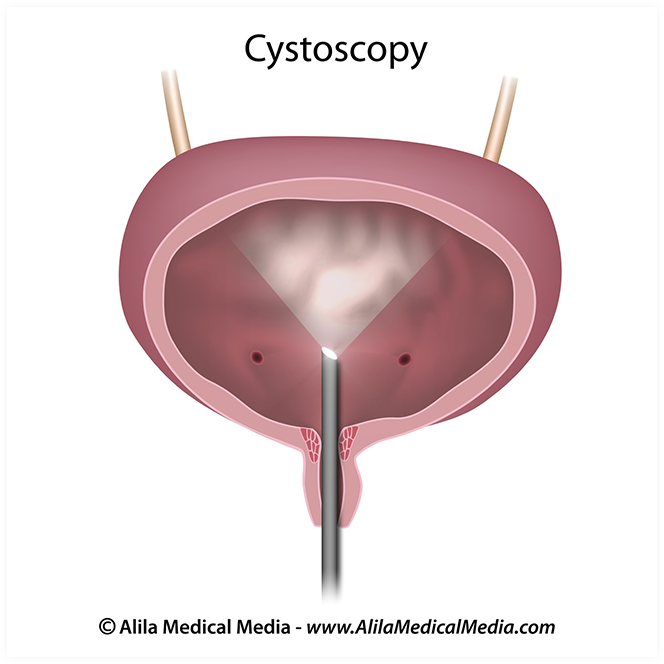
Cystoscopy is an office procedure where a small tube with a camera and light is passed through the urethra to visualize the bladder’s interior. It’s used to investigate specific conditions, including:
- Blood in Urine: Evaluating causes of microscopic hematuria.
- Painful Bladder Syndrome: Assessing bladder lining issues.
- Refractory Overactive Bladder or Recurrent UTIs: Identifying underlying causes.
Dr. Kumar uses cystoscopy to diagnose bladder issues and guide personalized treatment plans.
What Is the Procedure Like?
Cystoscopy is a quick, minimally invasive procedure performed in-office:
- Preparation: You’ll change into a gown, be positioned in stirrups, and the urethral opening is cleaned with a sterile swab.
- Numbing: A numbing ointment is applied to minimize discomfort.
- Procedure: A scope is inserted, causing brief stinging, then sterile water distends the bladder for inspection. Dr. Kumar may show you the bladder anatomy on a screen.
- Duration: Takes 5-10 minutes, with possible mild burning or blood in urine afterward, typically resolving within a day.
Dr. Kumar ensures your comfort and explains findings during the procedure.
Procedure Details
Cystoscopy is tailored to your needs, with key considerations:
- Anesthesia: Typically requires only numbing ointment, not systemic anesthesia.
- Special Cases: If an underlying condition might cause discomfort, Dr. Kumar may recommend anesthesia.
- Biopsy Option: If abnormalities are found, a biopsy may be performed to rule out other issues.
- Post-Procedure: Medications are available to relieve any temporary discomfort or burning.
Dr. Kumar customizes the procedure to address conditions like Painful Bladder Syndrome or recurrent UTIs.
Common Questions & Answers
Cystoscopy is an in-office procedure where a small tube with a camera visualizes the bladder’s interior to diagnose issues like blood in urine, Painful Bladder Syndrome, or recurrent UTIs.
No, it’s not painful. A numbing ointment minimizes discomfort, and you may feel only brief stinging during scope insertion.
Typically, only numbing ointment is needed. Dr. Kumar may recommend anesthesia for specific conditions that could cause discomfort.
The bladder is filled with sterile water to inspect its walls via a camera. The procedure takes 5-10 minutes, and Dr. Kumar may show you the bladder anatomy on a screen.
You may experience mild burning or blood in urine, which usually resolves within a day. Medications can relieve any discomfort.